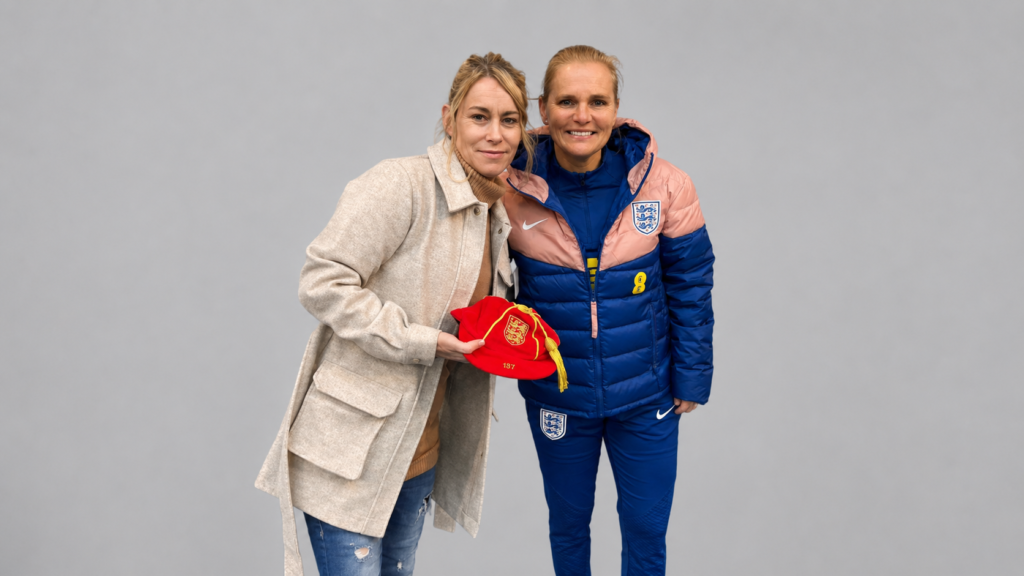

Aran Helen Nevins Embleton was born on 7 October 1981 in Cramlington, Northumberland, a region in North East England with a strong football culture and deep grassroots traditions. Growing up in this environment, she was surrounded by the sport from an early age, and like many talented players from the area, she developed her skills in local parks, school teams, and community clubs. Her early exposure to competitive football helped shape her natural attacking instincts and her confidence on the ball.
During her childhood and teenage years, women’s football in England was still developing in structure and recognition, meaning that players like Embleton had fewer formal development pathways compared to modern academies. Despite these limitations, she showed clear technical ability, especially in dribbling, passing, and offensive movement. Coaches and local observers often noted her ability to read the game and create chances in advanced positions.
Her early football journey is an example of how talent in English women’s football was often discovered through regional competitions and club-level performances rather than structured national scouting systems. This environment required determination and self-driven development, both of which became defining traits of her career.
Aran Embleton Youth Football Development and Early Club Experience
Aran Embleton’s early club football included playing for Blyth Spartans Kestrels, where she competed in mixed and women’s football setups. This phase of her development played a crucial role in shaping her technical foundation and tactical understanding. Playing in physically demanding environments helped her develop resilience, while her attacking instincts continued to stand out among peers.
Her youth football experience reflected the structure of women’s football in England during the 1990s, where regional clubs acted as the primary development hubs. Unlike today’s academy systems, players had to rely on local leagues and competitive fixtures to progress. Embleton adapted quickly to this environment, showing versatility as both a midfielder and forward.
This stage of her career laid the groundwork for her transition into senior football. Her performances at youth and regional level attracted attention from higher-tier women’s clubs, marking the beginning of her journey into elite competition.
Aran Embleton Doncaster Belles Era and Breakthrough in Elite Football
Aran Embleton’s breakthrough into top-level women’s football came when she joined Doncaster Belles around the 1999–2000 season. Doncaster Belles were one of the most successful and historic women’s football clubs in England, known for dominating domestic competitions and producing international players.
At Doncaster, Embleton experienced a significant step up in competition, training intensity, and tactical discipline. She played alongside established England internationals, which helped accelerate her development. One of her notable contributions during this period came in the FA Women’s Cup, where she played a role in assisting a decisive goal during a semi-final victory over Arsenal, a key moment in her early career.
This phase of her career marked her entry into elite women’s football and established her reputation as a technically gifted attacking midfielder capable of influencing high-pressure matches. The experience gained at Doncaster Belles became a foundation for her future club and international opportunities.
Aran Embleton Sunderland Women and Regional Football Identity
After her time at Doncaster Belles, Aran Embleton returned to the North East of England to play for Sunderland Women, a club with strong regional significance in women’s football development. This move reflected both her connection to her home region and the evolving structure of the women’s game in England during the early 2000s.
At Sunderland, she continued to develop her attacking game and maintain her competitive form. The club provided her with regular playing time and an environment where she could apply the experience gained at higher levels of competition. Her ability to contribute both goals and creative play made her an important part of the squad.
This stage of her career also highlighted the importance of regional clubs in sustaining women’s football during a period when professional opportunities were still limited. Players like Embleton played a key role in keeping competitive standards high across domestic leagues.
Aran Embleton Whitley Bay Ladies and Goal-Scoring Peak
One of the most remarkable phases of Aran Embleton’s career came during her time with Whitley Bay Ladies, where she experienced a significant goal-scoring peak. During the 2005–06 season, she scored an extraordinary 46 goals, a figure that highlighted her attacking dominance at regional level.
This period demonstrated her evolution as a forward, showing her ability to consistently finish chances and influence matches in the final third. Her movement off the ball, combined with her technical finishing ability, made her one of the most effective attackers in regional women’s football during that time.
Her performances at Whitley Bay also reinforced her reputation as a versatile attacking player capable of leading the line or playing just behind the striker. This adaptability allowed her to remain competitive across different tactical systems and team structures.
Aran Embleton North Shields Ladies and Later Playing Career
In 2011, Aran Embleton joined North Shields Ladies, continuing her football career into a more experienced phase. At this stage, she was no longer just a developing talent but an established player with significant experience in English women’s football.
Her role at North Shields extended beyond scoring and attacking contributions. She also provided leadership and guidance to younger players, helping to improve the overall competitive level of the team. Her presence brought experience from elite-level football into a developing squad environment.
This stage of her career reflects the transition many women footballers of her generation experienced, moving from top-level competition into regional and developmental roles while continuing to contribute to the sport.
Aran Embleton England Women’s National Team Career
Aran Embleton achieved one of the highest honors in football by representing the England women’s national team. She made her senior debut in 2001 after progressing through youth and development pathways within the national setup.
Her debut marked her entry into international football during a period when the England women’s team was steadily growing in competitiveness and visibility. She earned senior caps for England and participated in training camps and international fixtures, contributing to the team’s development during the early 2000s.
Although she was not selected for major tournament finals squads, her involvement in the national team reflects her standing among the top English players of her era. In 2023, she was awarded an official England Legacy Cap, receiving Legacy Number 137 in recognition of her contribution to the national team’s history and development.
Aran Embleton Playing Style, Strengths, and Football Attributes
Aran Embleton was known for her direct and intelligent attacking style, combining technical skill with strong positional awareness. She could operate effectively as both an attacking midfielder and forward, which made her a flexible option for coaches throughout her career.
Her key strengths included pace, creativity in the final third, and an instinct for goal-scoring positions. She was particularly effective in transition play, where she could exploit space quickly and create dangerous attacking situations. Her ability to finish chances also made her a consistent goal threat, especially during her peak years.
Beyond technical ability, her career was defined by determination and adaptability. Playing during a time when women’s football lacked full professional support required discipline and resilience, qualities she demonstrated throughout her playing years.
Aran Embleton Post-Retirement Role and Contribution to Football Development
After retiring from active professional football, Aran Embleton remained involved in the sport through coaching, mentoring, and community development activities. She has contributed to grassroots football initiatives, helping support the next generation of players in the North East and beyond.
Her post-playing career reflects a broader trend among former women’s footballers who continue to shape the sport through education and leadership roles. By sharing her experiences, she provides valuable insight into the challenges and growth of women’s football in England over several decades.
Her continued involvement in football ensures that her impact extends beyond her playing career, contributing to the development of future talent and strengthening the football community at regional level.
Conclusion: Aran Embleton’s Legacy in English Women’s Football History
Aran Embleton’s football journey represents an important chapter in the history of English women’s football. From her early development in Northumberland to representing England at international level, she built a career defined by talent, persistence, and consistent performance across multiple levels of the game.
Her contributions to clubs such as Doncaster Belles, Sunderland Women, Whitley Bay, and North Shields highlight her adaptability and long-term influence in domestic football. Her international recognition and Legacy Cap further confirm her place among England’s important football figures.
Today, Aran Embleton is remembered as part of a pioneering generation that helped shape the foundation of modern women’s football in England, leaving behind a legacy of inspiration, development, and lasting impact on the sport.