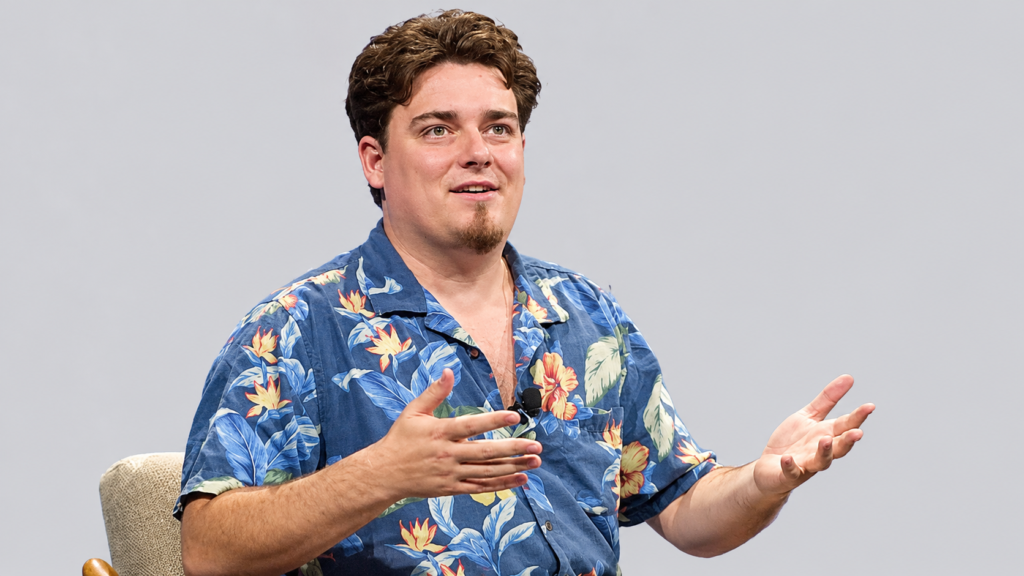

Palmer Luckey and Jeff Greene are two successful American entrepreneurs who have attracted attention because of their business achievements, financial success, and influence in different industries. Palmer Luckey is widely recognized as the founder of Oculus VR and Anduril Industries, while Jeff Greene is known for his real estate investments and successful financial decisions during the American housing crisis. Although both have accumulated significant wealth, their journeys toward success are very different.
Interest in Palmer Luckey and Jeff Greene also raises questions about their backgrounds, professional achievements, net worth, and possible connections. Luckey built his reputation through technology, virtual reality, and modern defense systems. Greene established his fortune through property investments, financial markets, and real estate development. Their stories offer interesting examples of entrepreneurship, business innovation, investment strategies, and the importance of recognizing opportunities in changing markets.
Palmer Luckey’s Early Life, Education, and Interest in Technology
Palmer Luckey grew up in Long Beach, California, in a family that encouraged curiosity and practical learning. He was homeschooled by his mother and developed an early interest in electronics, computers, and mechanical projects. His father also helped develop his interest in technology through activities involving cars and hands-on engineering. Rather than following a traditional educational path, Luckey spent much of his teenage years experimenting with electronic equipment and learning how different technologies worked.
One of the most interesting parts of his early life was his fascination with virtual reality. At a time when VR headsets were expensive, bulky, and often uncomfortable, he began collecting older devices and experimenting with ways to improve them. He wanted to make virtual reality more affordable and accessible to ordinary consumers. His early experiments eventually led to the development of a prototype headset that attracted attention from gaming enthusiasts and technology developers. This combination of independent learning, creativity, and practical experimentation became the starting point of his entrepreneurial career.
Oculus VR Acquisition and Palmer Luckey’s Business Success
Luckey’s biggest early business achievement came through Oculus VR, the company he founded in 2012. His work on the Oculus Rift attracted interest because it offered a more immersive gaming experience than traditional computer monitors and gaming displays. The company gained attention from developers who wanted to create virtual reality games, applications, and interactive experiences. Its early crowdfunding success also demonstrated that consumers were interested in a new generation of affordable VR technology.
In March 2014, Facebook announced its acquisition of Oculus for approximately $2 billion in cash and stock. Luckey was only 21 years old at the time, making the transaction an extraordinary achievement for a young entrepreneur. The acquisition helped introduce virtual reality to a much larger technology audience and strengthened Facebook’s interest in immersive digital experiences. Luckey remained involved with the company after the acquisition but left Facebook in 2016. Although his departure attracted public attention, Oculus remained an important part of his professional legacy and established the financial foundation for his later business ventures.
Anduril Industries, Artificial Intelligence, and Defense Technology
After his experience with Oculus, Palmer Luckey moved into a different area of technology by establishing Anduril Industries in 2017. He founded the company with Brian Schimpf, Trae Stephens, Matt Grimm, and other members of its founding team. Their goal was to modernize the defense industry by introducing advanced software, artificial intelligence, autonomous machines, and faster product development methods. The company took inspiration from Silicon Valley’s approach to building and improving technology.
Anduril’s products include autonomous drones, surveillance systems, counter-drone technology, and software for military operations. Its Lattice platform is particularly important because it connects information from sensors and other equipment to provide a more complete picture of an operational environment. The company has expanded beyond its early focus on border security into a broader defense technology business. In May 2026, Anduril raised $5 billion in a funding round that valued the company at approximately $61 billion. This valuation reflects strong investor interest, although it should not be confused with Luckey’s personal cash wealth.
Jeff Greene’s Childhood, Education, and Early Business Experiences
Jeff Greene was born on December 10, 1954, and grew up in Worcester, Massachusetts. His childhood experiences helped shape his attitude toward money, work, and financial independence. He began earning money through small jobs at an early age, including shoveling snow and delivering newspapers. These experiences introduced him to the value of hard work and encouraged him to look for opportunities to improve his financial circumstances.
Greene attended Johns Hopkins University and later earned an MBA from Harvard Business School. Paying for his education required scholarships, loans, and several part-time jobs. He reportedly taught Hebrew, checked identification outside university facilities, and worked as a circus promoter to earn money. His circus ticket business proved particularly important because he used his earnings to begin purchasing residential properties. This combination of education and practical business experience helped him understand financial management, property ownership, and the importance of investing money rather than relying only on employment income.
Jeff Greene’s Real Estate Investments and Financial Strategy
Jeff Greene’s real estate career began while he was studying at Harvard Business School. He purchased a three-family property in Somerville, Massachusetts, for approximately $37,000, using around $7,000 as a down payment. His original plan was to live in one part of the property and rent out the remaining units. However, he eventually rented the entire property and recognized the potential of generating income through residential real estate.
Greene continued purchasing properties and reportedly owned 18 properties by the time he completed his MBA. His early success was followed by difficulties during the real estate downturn of the early 1990s, when falling property values and financial pressure created serious challenges. Rather than abandoning the industry, he learned important lessons about debt, leverage, and market cycles. Over the years, he expanded his holdings into larger residential developments, commercial properties, and valuable real estate in Los Angeles and South Florida. His investment approach later became more focused on protecting existing wealth and maintaining assets with dependable long-term income.
Jeff Greene’s Subprime Mortgage Investment and the 2008 Financial Crisis
One of the most important moments in Jeff Greene’s financial career occurred before the 2008 global financial crisis. During the American housing boom, he became concerned that property prices were rising too quickly and that the mortgage market contained significant risks. Many financial institutions were investing in mortgage-backed securities connected to borrowers with limited credit histories. Greene believed that the housing market was vulnerable and decided to position himself against certain mortgage-related investments.
He purchased credit default swaps linked to subprime mortgage-backed bonds. These financial contracts could generate substantial returns if the underlying securities suffered serious losses. When the American housing market collapsed, the value of many mortgage-backed investments declined, allowing Greene to make an estimated $800 million from his position. He used a significant portion of the profits to expand his real estate investments, particularly in South Florida. This decision helped establish him as a billionaire and demonstrated the potential rewards of recognizing financial risks before they become widely understood. However, his success also highlights how complex and risky financial derivatives can be.
Palmer Luckey and Jeff Greene Net Worth in 2026
Palmer Luckey and Jeff Greene have accumulated substantial wealth through different industries. Palmer Luckey’s estimated net worth is approximately $5.9 billion in 2026. His wealth is primarily connected to his ownership interest in Anduril Industries and the financial success of Oculus VR. The $61 billion valuation of Anduril in May 2026 has attracted considerable attention to his financial position. Nevertheless, private company shares are not the same as immediately available cash, and his actual wealth can change as company valuations and investments fluctuate.
Jeff Greene’s estimated net worth is approximately $10.1 billion in 2026. His fortune is mainly associated with real estate holdings in Los Angeles and South Florida, alongside stocks and other investments. His famous investment against subprime mortgage-backed securities also played an important role in building his wealth. Although these estimates place Greene above Luckey in billionaire rankings, net worth figures should be treated as estimates rather than exact personal bank balances. Both entrepreneurs have financial interests that can change with market conditions, investment performance, and private asset valuations.
Personal Lives, Public Influence, and the Connection Between Them
Palmer Luckey is known for his interest in technology, gaming, engineering, and national security. His public profile also includes political involvement and discussions about the future of American defense. His leadership at Anduril has made him an influential figure in conversations about artificial intelligence, autonomous systems, military modernization, and the relationship between private technology companies and government institutions.
Jeff Greene has developed a public identity beyond real estate investment. He is married to Mei Sze Greene, and the couple have three children. They established The Greene School in West Palm Beach, supporting educational opportunities for children. Greene has also participated in American politics, including unsuccessful campaigns for the Democratic nomination for the U.S. Senate in Florida and for Florida governor in 2018. His philanthropic activities include supporting education and regional development. In 2026, the couple donated eight connected parcels of land to support Vanderbilt University’s planned graduate campus in West Palm Beach.
There is no established public evidence that Palmer Luckey and Jeff Greene are relatives, direct business partners, or co-founders of a company. Their careers have developed independently, and they are associated with different industries. Their names may appear together because readers are interested in successful entrepreneurs, billionaire net worth, and American business personalities. It is important to distinguish shared public interest from a verified personal or professional relationship.
Conclusion
Palmer Luckey and Jeff Greene have built successful business careers through different opportunities, decisions, and investment strategies. Luckey transformed his interest in virtual reality into Oculus VR before establishing Anduril Industries, a major defense technology company focused on artificial intelligence, autonomous systems, and modern security solutions. His journey demonstrates how technical creativity and business innovation can influence industries far beyond their original markets.
Jeff Greene built his fortune through residential property investments, commercial real estate, and a successful financial position during the 2008 housing crisis. His experiences demonstrate the importance of understanding market conditions, managing financial risks, and recognizing opportunities during economic uncertainty.
Although both men are American billionaires with impressive achievements, there is no established public evidence that they are relatives or direct business partners. Their stories are connected mainly by their entrepreneurial success, financial influence, and ability to recognize valuable opportunities. Together, their backgrounds illustrate two different paths to building substantial wealth in modern America.