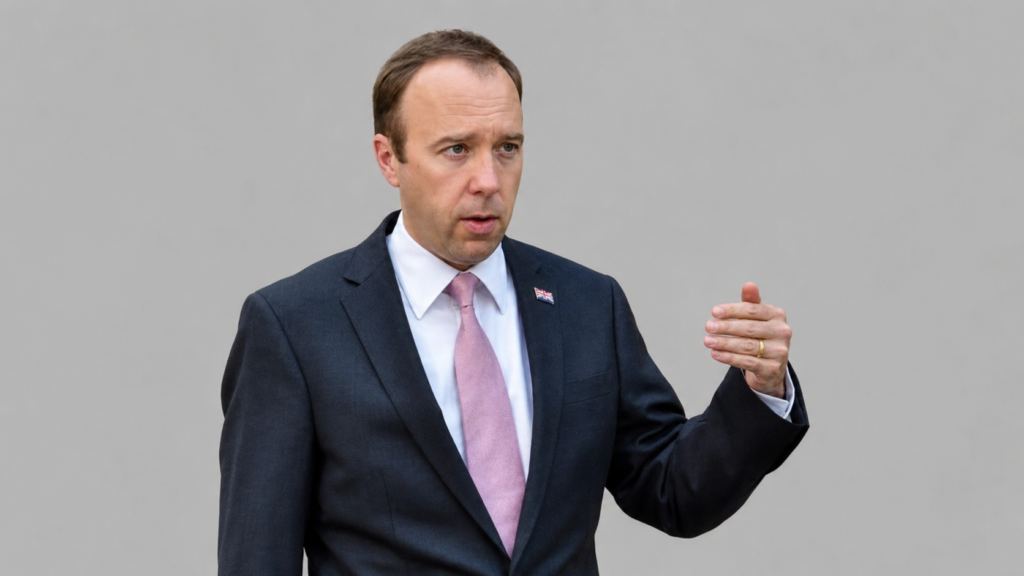

Matt Hancock is one of the most discussed British politicians of the modern era. During his time as Secretary of State for Health and Social Care, he became the public face of the UK’s response to the COVID-19 pandemic. Daily press conferences, emergency health policies, nationwide lockdowns, and the rollout of vaccines placed him at the centre of one of the most significant public health crises in British history. While many people remember him for his role during the pandemic, his political career began years earlier and included several important government positions focused on technology, business, and digital transformation.
Throughout his career, Hancock has been praised for supporting innovation in healthcare and government services while also facing heavy criticism over decisions made during the pandemic and his personal conduct. His career reflects both the opportunities and challenges of serving in high public office during an unprecedented global emergency. Understanding Matt Hancock’s political journey helps explain why he remains one of the most recognized figures in recent UK politics and why discussions about his leadership continue today.
Early Life and Education
Matthew John David Hancock was born on 2 October 1978 in Chester, Cheshire, England. He attended The King’s School in Chester, where he studied mathematics, physics, computing, and economics before continuing his education at the University of Oxford. At Exeter College, Oxford, he earned a first-class degree in Philosophy, Politics and Economics, commonly known as PPE, a course that has produced many British political leaders. He later completed a Master of Philosophy in Economics at Christ’s College, Cambridge, strengthening his understanding of economic policy and public administration.
Before entering Parliament, Hancock gained valuable experience outside politics. He worked briefly in his family’s software business before becoming an economist at the Bank of England, where he focused on financial stability and economic analysis. He later served as an adviser and chief of staff to George Osborne, who was then Shadow Chancellor. These early experiences helped develop his knowledge of economics, technology, and government policy, which later shaped many of his political priorities.
Entry into Politics and Rise Through Government
Matt Hancock entered Parliament in 2010 after being elected as the Conservative Member of Parliament for West Suffolk. During his first years in Westminster, he served on parliamentary committees before receiving ministerial appointments in several departments. His ability to understand technology and economic policy quickly made him one of the rising figures within the Conservative Party. He became known for promoting digital innovation, improving government services, and encouraging greater use of technology across the public sector.
Over the following years, Hancock served in several important ministerial roles, including Minister for Skills, Minister for the Cabinet Office, and Minister for Digital. In January 2018, he was promoted to Secretary of State for Digital, Culture, Media and Sport. Only a few months later, he became Secretary of State for Health and Social Care, taking responsibility for the National Health Service, public health policy, and one of the largest government departments in the United Kingdom.
Becoming Health Secretary Before the Pandemic
When Matt Hancock became Health Secretary in July 2018, his initial priorities focused on improving patient care, supporting NHS staff, increasing the use of digital healthcare, and modernising health services. He believed that technology, better use of healthcare data, and artificial intelligence could improve treatment while making the NHS more efficient. His department encouraged greater investment in electronic health records, digital appointments, and innovation within medical services.
Long before COVID-19 appeared, Hancock frequently spoke about preparing the healthcare system for future challenges. He promoted research, supported medical technology companies, and encouraged partnerships between government and the healthcare sector. Although these initiatives received attention within government, they were soon overshadowed by the arrival of the coronavirus pandemic, which dramatically changed both his responsibilities and his public profile.
Leading the United Kingdom During COVID-19
The first confirmed cases of COVID-19 in the United Kingdom appeared in early 2020, transforming Matt Hancock into one of the country’s most visible political leaders. Alongside Prime Minister Boris Johnson and senior medical advisers, Hancock regularly addressed the nation through televised press conferences. He announced lockdown measures, explained public health guidance, introduced testing programmes, and reassured the public about government efforts to protect lives and support the NHS. Throughout the crisis, he worked with health officials, scientists, and local authorities to respond to rapidly changing circumstances.
One of the government’s biggest achievements during this period was the rapid rollout of COVID-19 vaccines. Hancock frequently described vaccination as the country’s best path out of the pandemic and supported one of the fastest vaccination campaigns in Europe. At the same time, his leadership faced significant criticism over issues including testing targets, care home policies, procurement of personal protective equipment, and other emergency decisions. These debates continue to be examined by historians, policymakers, and the UK COVID-19 Inquiry as they assess the country’s overall response to the pandemic.
Achievements, Reforms, and Contributions
Although the COVID-19 pandemic dominated Matt Hancock’s time as Health Secretary, his career included several achievements in healthcare and digital government. He strongly supported the use of technology to improve public services, believing that digital systems could make healthcare more efficient and accessible. During his time in office, he encouraged greater investment in electronic health records, online NHS services, and data-driven healthcare. These initiatives aimed to reduce paperwork, improve communication between healthcare providers, and make it easier for patients to receive medical support.
Another significant aspect of Hancock’s tenure was the UK’s vaccination programme against COVID-19. Working with scientists, healthcare professionals, pharmaceutical companies, and NHS staff, the government introduced one of the fastest vaccine rollouts in Europe. Millions of people received vaccinations within a relatively short period, helping reduce severe illness and hospital admissions. Hancock often described the vaccine programme as one of the most important achievements of his public service career, crediting the dedication of healthcare workers, researchers, volunteers, and public health teams across the country.
Controversies and Resignation
Despite his achievements, Matt Hancock’s political career became heavily affected by controversy. Throughout the pandemic, questions were raised about testing capacity, the supply of personal protective equipment, the discharge of hospital patients into care homes, and the awarding of emergency government contracts. Opposition parties, journalists, and independent observers called for greater transparency regarding several decisions made during the public health emergency. Hancock consistently defended many of these actions by arguing that the government had been responding to an unprecedented crisis where decisions often needed to be made quickly.
In June 2021, Hancock resigned as Health Secretary after CCTV footage showed him embracing and kissing his aide, Gina Coladangelo, inside his government office while COVID-19 social distancing rules remained in place. The incident generated widespread criticism because the government had asked the public to follow strict restrictions on social contact. Hancock acknowledged that he had broken the guidance he had helped introduce and stepped down from his cabinet position. The resignation marked a major turning point in his political career and significantly changed public opinion about his leadership.
Life After Government and Public Appearances
Following his resignation from government, Matt Hancock remained a well-known public figure. He continued serving as the Member of Parliament for West Suffolk for a period, although his relationship with the Conservative Party became increasingly difficult. In 2022, he attracted widespread media attention after appearing on the television programme I’m a Celebrity… Get Me Out of Here!. His decision to join the reality show while still serving as an MP received criticism from political colleagues, and the Conservative Party temporarily removed the parliamentary whip during his participation.
Hancock later announced that he would not stand as a Conservative candidate at the 2024 General Election, bringing his parliamentary career to a close after serving for fourteen years. Since leaving Parliament, he has remained active through interviews, public speaking events, television appearances, and discussions about healthcare policy, technology, leadership, and crisis management. He has also reflected publicly on the difficult decisions taken during the pandemic and the personal consequences that followed.
Matt Hancock’s Legacy and Conclusion
Matt Hancock’s place in British political history will almost certainly remain closely connected to the COVID-19 pandemic. Few modern politicians have faced challenges of a similar scale or operated under such intense public scrutiny. Supporters argue that he helped lead the NHS through an extraordinary health emergency and played an important role in delivering a successful vaccination programme that protected millions of people. They also point to his long-standing support for digital transformation in healthcare and government services as contributions that continue to influence public policy.
Critics, however, believe that mistakes made during the pandemic, questions surrounding procurement decisions, care home policies, and his resignation following the breach of COVID-19 restrictions have permanently shaped his public reputation. The findings of the UK COVID-19 Inquiry and future historical research will continue to influence how his leadership is judged. Regardless of differing opinions, Matt Hancock remains one of the defining political figures of the pandemic era, and his decisions will continue to be studied for years to come.
In conclusion, Matt Hancock’s career reflects both the opportunities and responsibilities that come with serving in senior government. From his early work in economics and technology to becoming one of the country’s most recognizable political leaders, his journey has been marked by significant achievements as well as serious controversies. His leadership during one of the greatest public health emergencies in modern history ensured that his actions would have a lasting impact on British politics. Whether viewed as a reformer, a crisis manager, or a controversial public figure, Matt Hancock’s story remains an important chapter in the political history of the United Kingdom.